
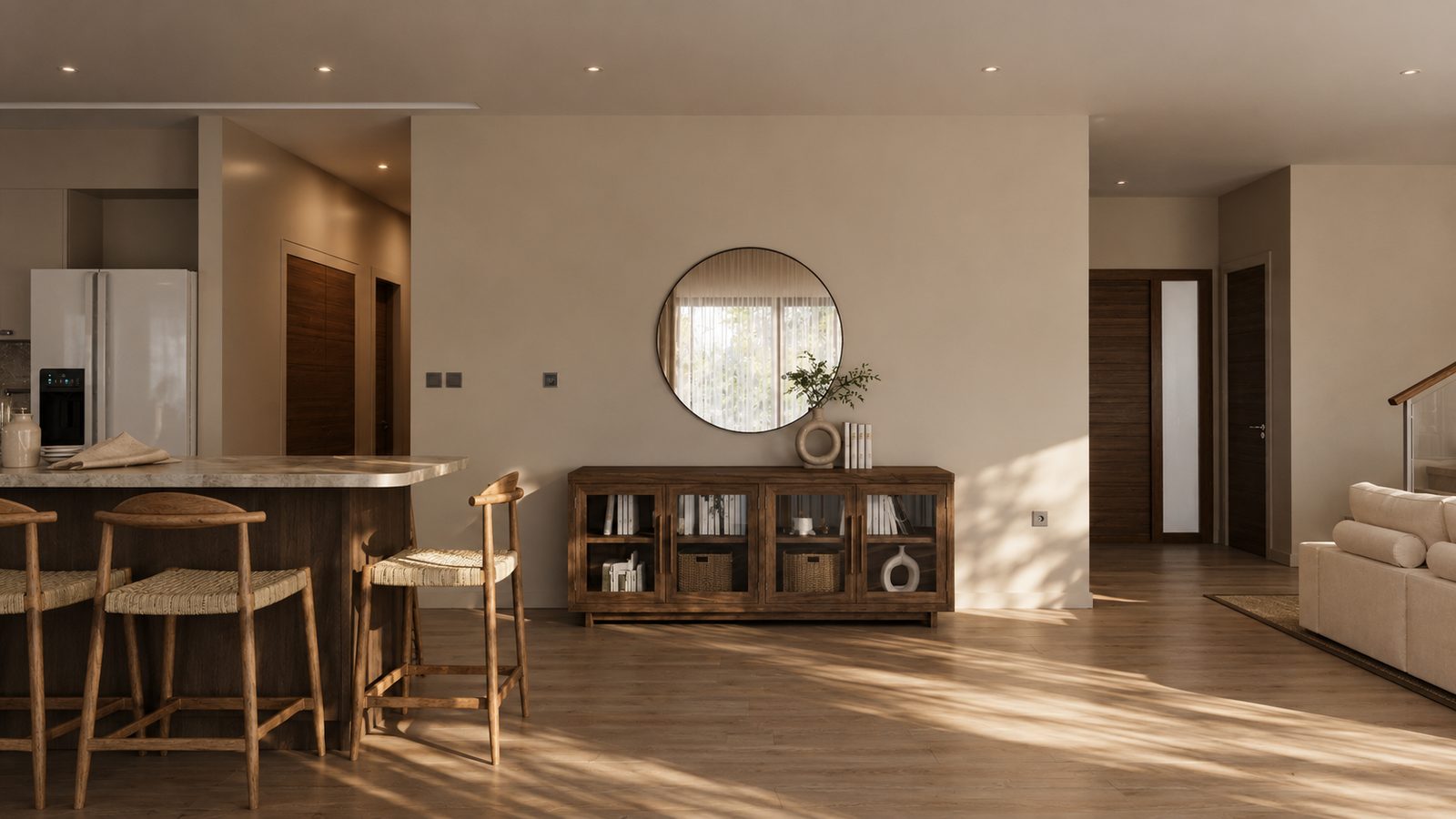
TL;DR: A full staircase rebuild in a Dubai villa runs from about AED 20,000 to AED 150,000 and beyond. Re-cladding a 12 to 15 step flight in marble costs AED 5,000 to 10,000, frameless glass railings run AED 1,800 to 3,500 per square metre, and channel-fixed glass starts near AED 1,200. Labour is 30 to 50 per cent of the total.
What a staircase renovation in a Dubai villa actually costs
A staircase quote splits into four lines: what you strip out, what goes on the treads, what holds people in, and what the fabricator charges to measure, make and fit it. Everything else is a variation of those four. The reason two quotes for the same flight can differ by a factor of three is that one of them prices glass by the square metre of finished balustrade and the other prices it per panel, with the handrail hidden in a separate line.
Take a real shape: a straight flight of 14 risers with a short upper landing, roughly 8 running metres of balustrade at 1,100 mm high, so about 9 square metres of glass. Market supply-and-fit bands in Dubai put that at:
- Marble treads and risers, 14 steps, with anti-slip grooving: AED 5,000 to 10,000.
- Channel-fixed glass, 9 square metres at AED 1,200 to 2,000 per square metre: AED 10,800 to 18,000.
- A 304 stainless handrail, 8 metres at AED 900 to 1,500 per metre: AED 7,200 to 12,000.
That flight lands between AED 23,000 and 40,000. Specify the same stair in frameless glass (AED 1,800 to 3,500 per square metre) with a 316 marine-grade handrail (AED 1,500 to 2,200 per metre) and top-band stone, and you are at AED 38,000 to 59,000 for the same 14 steps. Nothing structural has changed. Only the hardware and the fixing method.
Those three lines do not cover demolition, protecting the route through the house, making good the plaster where the old balustrade was chemically anchored, or any electrics for handrail lighting. Those are the lines that push a tidy-looking quote up by a fifth. Across the market, labour and site works account for 30 to 50 per cent of a staircase total, and the quotes that look suspiciously cheap are usually the ones where that share has been trimmed rather than earned. These are market bands we see in current Dubai pricing, not a DOMECO rate card. For how a staircase sits inside a whole-house budget, our villa renovation cost breakdown has the wider numbers.
One saving worth knowing before you choose: frameless glass with a slot-set top cap can carry the grab function itself, which removes the separate stainless handrail from the quote. On the frameless example above, that is AED 12,000 to 17,600 gone, the full cost of the 316 handrail. Confirm with your consultant that the cap satisfies the graspable-handrail requirement for your layout before you delete the line.
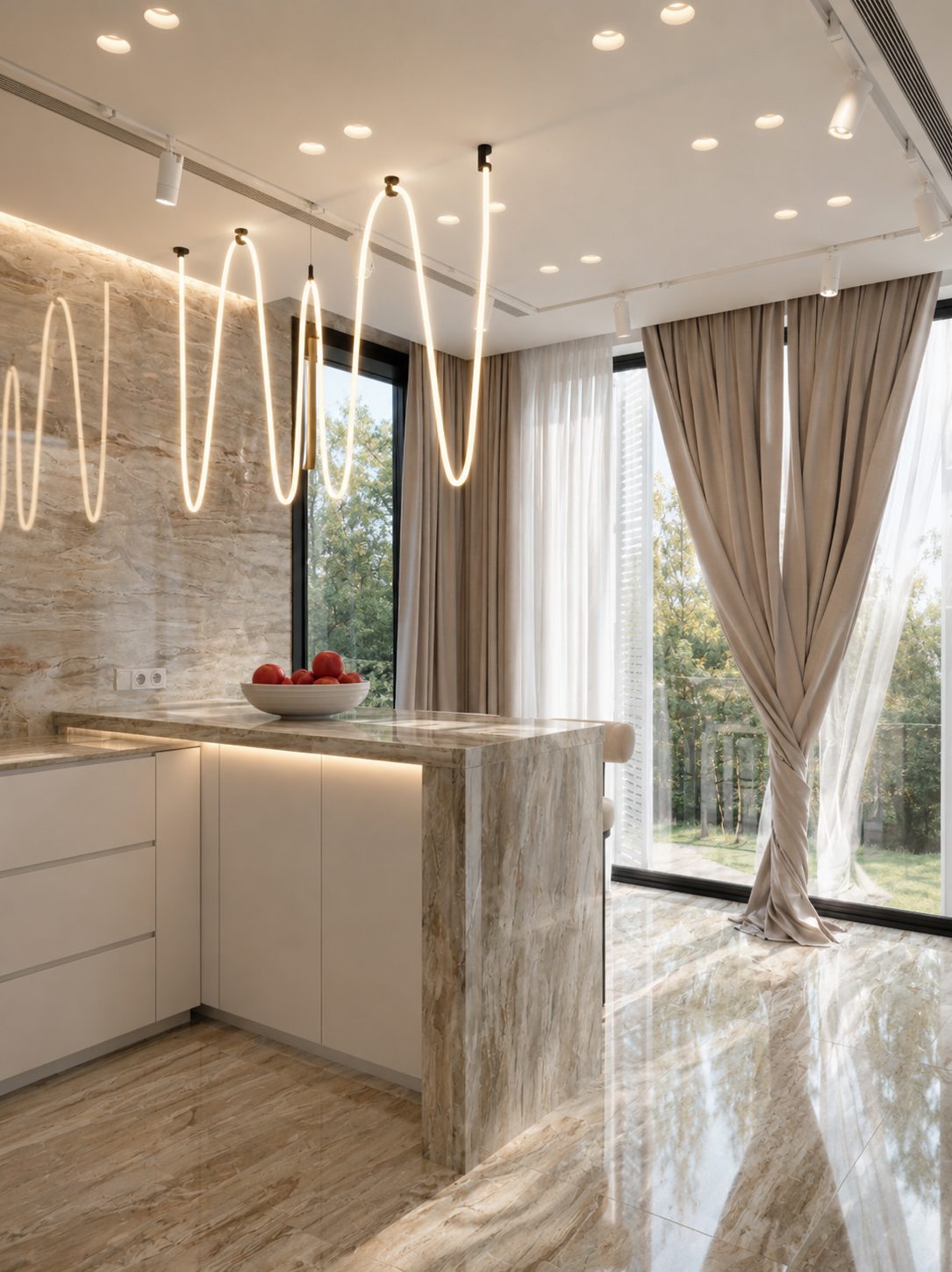
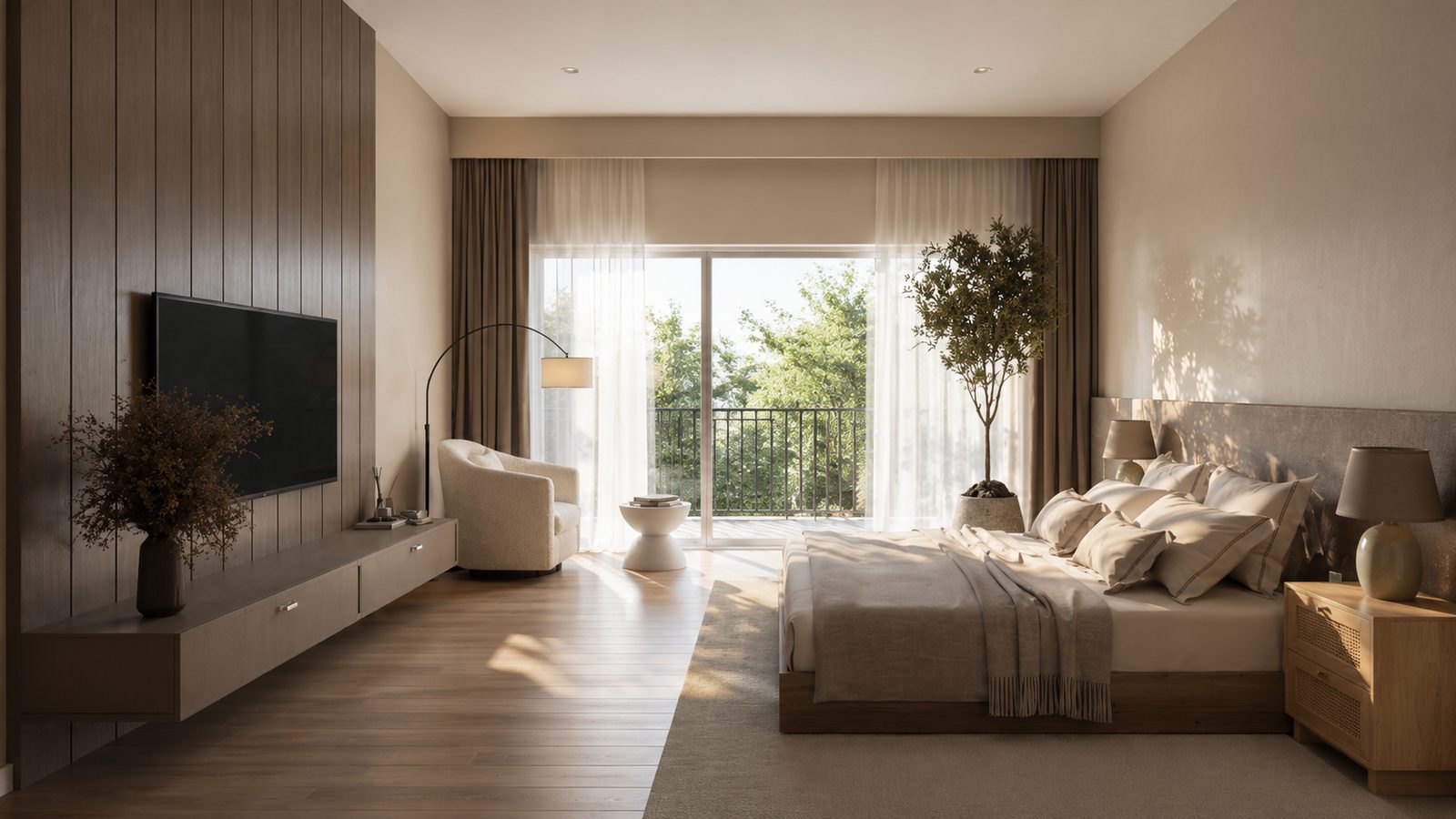
Materials side by side: glass, marble, timber and steel
Climate decides more of this than taste does. A villa stair sits in the one part of the house with a double-height window, direct sun for part of the day, and in coastal communities, salt air every time a door opens.
- Toughened laminated glass. AED 1,200 to 3,500 per square metre fitted, depending on how it is held. It does not fade, does not mind heat, and keeps a double-height stairwell feeling open. The honest cost is cleaning: between hard water, fine dust and hand marks, glass on a family stair needs wiping down weekly to look like the photograph you bought it from.
- Marble and natural stone. AED 5,000 to 10,000 to clad a 12 to 15 step flight, before wastage on veined slabs. It reads as permanent and it is cool underfoot. It also etches, needs resealing, and in a polished finish it is genuinely slippery with wet feet from the pool.
- Porcelain. Specified more often every year where owners want the stone look without the maintenance calendar. Rectified slabs cut to tread with a mitred nosing, UV stable, no sealing schedule. We set out the trade-offs in detail in marble versus porcelain flooring.
- Timber. A teak or oak railing with handrail runs AED 8,000 to 15,000. Indoors at 22 to 24 degrees it behaves, provided the timber is acclimatised before it is cut. In a stairwell with unshaded western glass, expect colour shift on oak within two or three summers. Nothing untreated goes outside.
- Stainless steel. Grade 304 at AED 900 to 1,500 per running metre, grade 316 at AED 1,500 to 2,200. Within a kilometre or two of the water, 304 tea-stains in the first year. On Palm fronds, Jumeirah Bay and Bluewaters we specify 316 on every fixing, spigot and handrail, and the price difference is small against the cost of replacing corroded hardware in a finished villa.
Glass railings: frameless, semi-frameless and channel-fixed
The three names describe how the glass is held, and that is where most of the price sits.
Channel-fixed glass drops into an aluminium U-shoe that is bolted along the stringer or the slab edge, then packed and set with wedges. It is the least expensive route at AED 1,200 to 2,000 per square metre, it is forgiving of a slab that is a few millimetres out, and the shoe is visible. Most owners cover it with a cladding strip.
Semi-frameless uses posts at intervals, usually stainless, with glass infill between them, at AED 1,500 to 2,500 per square metre. It uses thinner glass, which is why it costs less than frameless, and it is the easiest of the three to replace a single panel in.
Frameless at AED 1,800 to 3,500 per square metre is base-fixed on spigots or set into a continuous shoe cast or chemically anchored into the structure. Thicker laminated glass, more hardware, and far more labour in levelling, because every panel has to stand plumb against the neighbour with a consistent joint. Core drilling into a stair slab also needs the reinforcement scanned first, which is a half-day nobody budgets for.
The sequencing trap is specific to frameless. The shoe or spigot base must be set dead level before the floor finish is laid, so the railing has to be chosen and ordered before the stone goes down. Deciding on frameless after the marble is in means lifting treads or accepting a packer under the shoe.
Safety sits in the same conversation. Dubai Municipality requires a handrail at at least 900 mm and no gap in the balustrade through which a 100 mm sphere passes, which is a child-protection rule. That 100 mm applies to the gap under a glass panel as well as between posts, and it is the detail site teams most often get wrong when they shim a panel to level it.
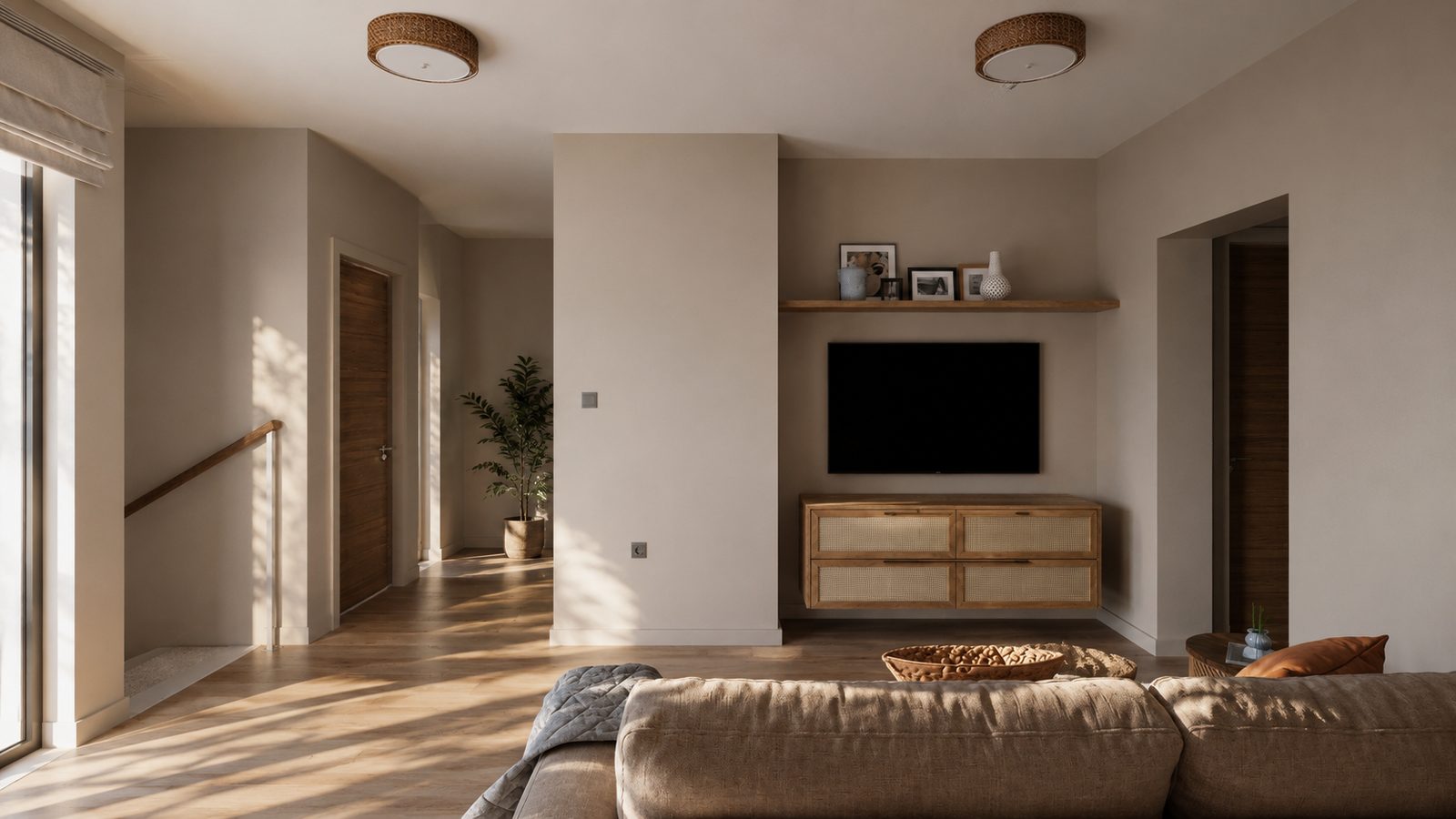
Marble and stone on treads: heat, slip and wear
Ask for a slip figure in writing before you sign off a finish. A polished marble tread photographs beautifully and turns into a hazard with a wet foot on it, which in a villa with pool access is a weekly event, not an edge case. Honed or leather-finished stone with grooved anti-slip inserts near the nosing is the specification that survives family use, and the grooving is cheap to add while the slab is in the workshop and expensive to retrofit on site.
Wastage is the other number that moves the quote. Treads are cut from a 20 mm slab, so you pay for stone you never see. Budget 25 to 40 per cent over the finished area, and more if the veining has to run across the flight. A nosing detail built from a mitre reads as a solid stone edge; a bullnose on the slab edge is cheaper and reads thinner.
Then there is Dubai's grit. Fine sand tracked in from the garden works as an abrasive on the traffic line, so a polished finish dulls down the middle of each tread within a couple of years while the edges stay bright. Honed stone ages evenly and hides it. Sealing on a daily-use stair is a 12 to 18 month job, and the household cleaner that gets used on everything else will etch calcite stone in minutes.
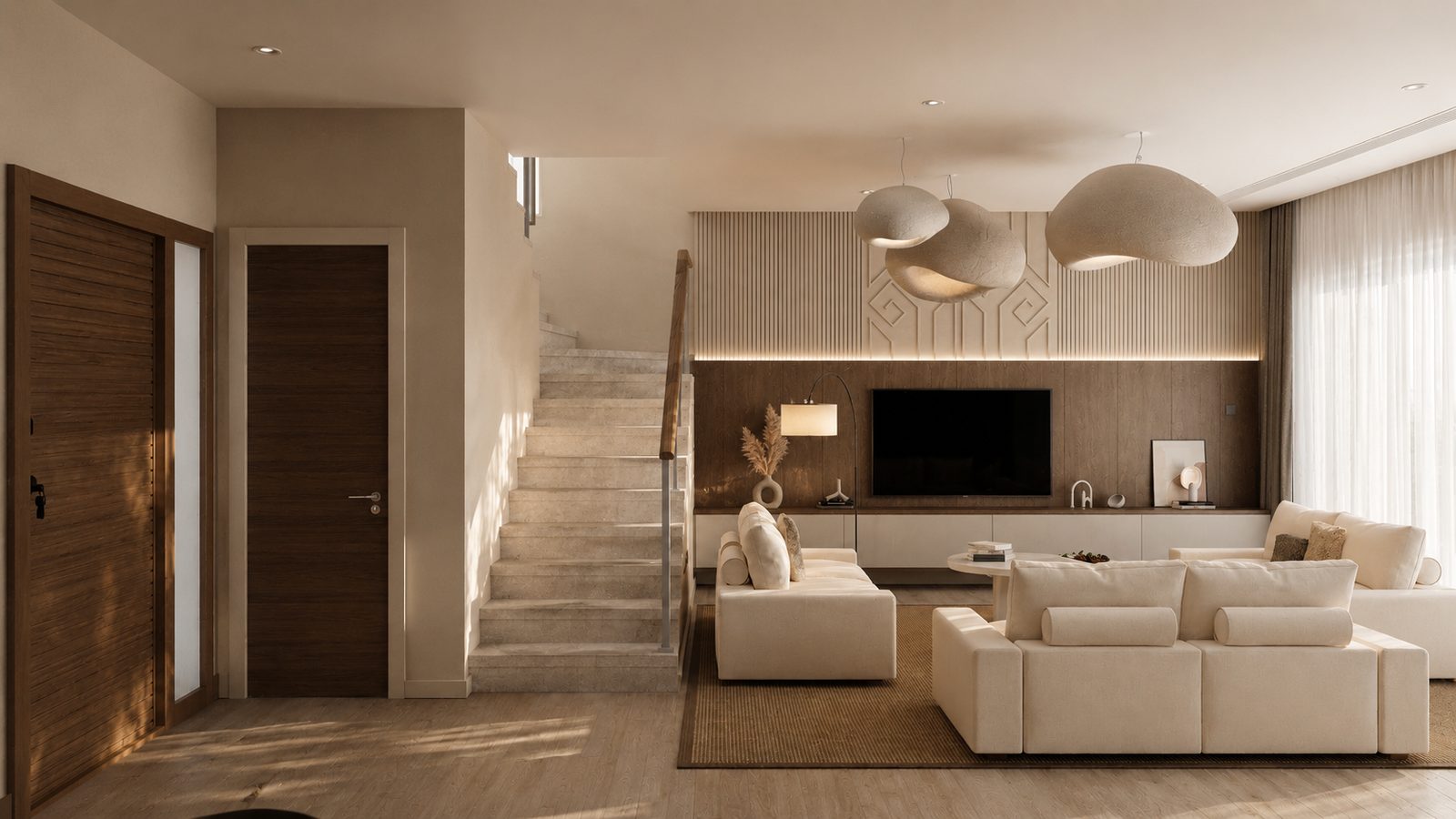
Stair shape drives the quote more than the material
A straight flight is the cheapest shape to renovate in any material. Rectangular glass panels, repeating treads, one template.
A quarter or half landing with winders changes that. Every winder tread is a different trapezoid, each one templated and cut individually, and the glass panel at the turn is a bespoke shape with a cut edge that has to be polished before toughening. Allow more stone wastage and more fabrication time than the running-metre maths suggests.
Spiral and helical stairs are a different market. Curved laminated glass is bent to a radius in a kiln, almost always imported, and the lead time runs into weeks before anything arrives on site. Price per square metre multiplies. The honest alternative most owners take is a set of narrow flat panels following the curve in facets, with a bent stainless or timber handrail over the top. From two metres away nobody reads the facets, and the saving is substantial.
Cantilever and floating treads are structure, not finishing. The stringer is embedded in a wall or a steel spine, loads are calculated, and that is a consultant's drawing with a structural engineer's name on it. If a designer draws floating treads without an engineer attached, that drawing is not buildable.
Approvals, NOCs and the safety rules that apply
Like-for-like work keeps you in easy territory. Re-cladding existing treads and replacing a railing in the same position, at the same height, with no change to the structure, usually needs only the community NOC and a registered contractor.
The moment the structure or the geometry changes, the job becomes a permit application. New opening, moved flight, altered riser heights, a cantilever detail, core drilling into a structural slab: all of that goes to Dubai Municipality through a registered consultant, with drawings. Approval windows commonly run 3 to 10 working days once the file is complete, and "complete" is doing a lot of work in that sentence.
In a gated community the developer sits in front of the authority. Emaar typically turns an NOC around in 5 to 10 working days with fees of AED 500 to 3,000, Nakheel in 7 to 15 working days at AED 2,000 to 5,000. Each one wants the contractor's trade licence, insurance, workers' details, a method statement and a security deposit. We cover the full set in our guide to community NOCs for Emaar, Nakheel and Palm villas.
Communities set working hours and noise windows, which rules out the loudest demolition on Fridays and public holidays in most of them. From mid-June to mid-September the midday break also applies to outdoor work between 12:30 and 15:00, which matters if steel is being cut or welded in the driveway. Put both in the programme now.
How the work runs, from survey to handover
A straightforward villa staircase takes 4 to 8 weeks door to door. On site it is far shorter than that, which is why the planning stage is the one to protect.
- 1. Survey, structural check and quote. The flight is measured as built, not off the original drawing, because 15-year-old villas drift.
- 2. Drawings and approvals: 2 to 4 weeks for the NOC and, if the structure moves, the municipality file.
- 3. Strip-out: 3 to 7 days for the old finish, the balustrade and making good the fixings.
- 4. Templating on the stripped structure, then fabrication. Glass toughening and lamination is done locally and moves quickly. Stone that is not in Al Quoz stock arrives by container, and a specific slab ordered from Italy or Turkey is a 6 to 12 week wait before cutting starts.
- 5. Installation: 5 to 14 days, stone first, railing after, with the shoe set before the finish where the detail demands it.
- 6. Finishing and polishing: 2 to 5 days, including grouting, silicone, sealing and the first clean.
For the programme to hold, the template has to be taken after demolition, from the real opening. The glass and stone order has to be signed off with sizes, finish, edge detail and fixing type written down, because a verbal change at that stage is the single most common cause of a four-week delay. And there should be a dry fit before anything is permanently bonded.
Plan where the family lives. In a two-storey villa with one staircase, there are days when there is no safe route between floors, and pretending otherwise on the programme makes for a miserable fortnight. Our fixed scope, fixed price and the penalty we carry for every day of overrun are written into the contract before the first tool comes out of the van, and how that works is set out in our services. Workmanship carries a one-year guarantee, and if you want a quote against your own flight, send photographs and the floor-to-floor height to our team.
Choosing the spec for your own villa
If the villa is a rental or you plan to sell inside two years, a frameless glass rebuild does not come back in the price. Honed porcelain treads with a channel-fixed glass railing gives you most of the visual upgrade for roughly half the cost, and tenants do not pay extra for spigots. We would rather say that before the quote than after it.
If this is the house you are keeping, the argument flips. Frameless glass with stone treads is a 15-year decision, and the cost difference amortises into nothing against the daily experience of walking up it.
Small children change the specification regardless of budget. No horizontal rails, because they are a ladder. Full compliance with the 100 mm gap at the base of every panel. Honed stone rather than polished, because the first wet foot proves the point.
Coastal villas have one rule above the rest: 316 stainless on every exposed fixing, laminated rather than monolithic glass, and no untreated timber anywhere the spray reaches. See finished examples of both specifications in our project portfolio.
FAQ
How much does a complete staircase renovation cost in Dubai?
Market totals run from about AED 20,000 for a straight flight re-clad with a channel-fixed glass railing to AED 150,000 and beyond for a curved or cantilevered stair with frameless glass and imported stone. A typical 12 to 15 step villa flight with marble treads and a glass balustrade lands between AED 23,000 and 59,000 depending on the fixing method and the grade of steel. Labour and site works account for 30 to 50 per cent of whatever the total is.
What is the price difference between frameless and semi-frameless glass railings?
Frameless sits at AED 1,800 to 3,500 per square metre fitted, semi-frameless at AED 1,500 to 2,500. The gap comes from thicker laminated glass, more hardware and considerably more labour levelling each panel. Channel-fixed glass is the cheaper third option at AED 1,200 to 2,000, and it is the easiest to repair if a panel is ever damaged.
Do I need municipality permission to renovate a villa staircase?
Re-cladding treads and swapping a railing in the same position usually needs only the community NOC. Any change to the structure, the opening, the riser heights or the position of the flight is a Dubai Municipality permit submitted through a registered consultant, and approval commonly takes 3 to 10 working days once the file is complete. In a gated community the developer NOC comes first, at 5 to 15 working days depending on who manages it.
Which material lasts best on Dubai villa stairs?
For treads, porcelain and honed natural stone both hold up well, with porcelain winning on maintenance and stone winning on depth of appearance. For railings, toughened laminated glass with 316 stainless fixings is the specification that survives coastal air and direct sun without a service calendar. Timber is viable indoors if it is acclimatised before cutting and kept out of unshaded western light.
How long does a staircase renovation take?
Allow 4 to 8 weeks from the first survey to handover. Planning and approvals take 2 to 4 weeks of that, demolition 3 to 7 days, installation 5 to 14 days, and finishing 2 to 5 days. The variable that blows the programme is material lead time: locally toughened glass is quick, while a specific imported stone slab can be a 6 to 12 week wait before fabrication even begins.